








The AI Inventory Gap: Why Financial Institutions Need to Know What AI Assets They Have Before They Can Effectively Govern
As AI adoption accelerates across financial institutions, many organizations are discovering a growing challenge:
They know AI is being used across the enterprise. But they often cannot confidently identify every AI model, agent, or vendor-embedded tool currently in operation.
This is the AI inventory gap, and it is quickly becoming one of the most important governance and operational risk issues facing financial institutions today.
AI Is Expanding Faster Than Governance Programs
AI tools are increasingly being used across:
- Credit decisioning
- Fraud detection
- Customer service
- Workflow automation
- Document summarization
- AI copilots and autonomous agents
Many of these tools are being built directly within business units using platforms like Microsoft Copilot Studio and Azure AI Studio.
While these tools create efficiencies, they also create new governance challenges when organizations lack visibility into what exists across the environment.

The Visibility Problem
Most organizations have partial visibility into their AI environment.
Very few have complete visibility.
That often leads to:
- AI models deployed and later forgotten
- AI agents never formally registered
- Vendor tools with embedded AI capabilities that were never risk assessed
- Third-party AI tools processing sensitive customer data without centralized oversight
This is not typically a failure of intent.
It is the result of trying to govern rapidly growing AI ecosystems without the infrastructure designed to discover, inventory, and monitor them.

Regulators Are Increasingly Focused on AI Governance
While regulatory frameworks continue to evolve, one expectation is becoming increasingly clear:
Organizations need to know what AI assets they have before governance can work effectively.
EU AI Act
The EU AI Act introduces requirements around:
- Risk management
- Technical documentation
- Monitoring
- Classification of high-risk AI systems
Organizations cannot classify or monitor systems they have not identified first.
DORA
Digital Operational Resilience Act (DORA) expands expectations around Information and Communication Technology (ICT) asset governance and operational resilience.
AI systems and agents increasingly fall within those requirements, creating additional pressure around inventory management and governance visibility.
US Treasury Financial Services AI Risk Management Framework
The Treasury Department’s Financial Services AI Risk Management Framework also reinforces a foundational principle of AI governance: organizations first need to inventory and scope AI use cases across the enterprise before governance programs can effectively mature. Institutions need visibility into the AI operating across their environment before they can properly assess, monitor, and govern it.
The Risks Extend Beyond Compliance
Regulatory pressure is only part of the equation.
Ungoverned AI introduces real business risk today, including:
- Financial risk
- Operational disruption
- Reputational exposure
- Privacy concerns
- Customer harm
- Continuity and concentration risk
Examples include:
- Biased lending models creating fair lending exposure
- AI agents with broad customer data access
- Business-critical processes dependent on undocumented AI systems
These are familiar categories of enterprise risk, now applied to a rapidly expanding class of assets.
Discovery Is Becoming Essential
One of the biggest challenges in AI governance is simply finding AI assets.
Many organizations still rely on:
- Manual inventories
- Questionnaires
- Self-reporting
These methods are often slow, inconsistent, and incomplete.
As AI adoption grows, organizations increasingly need automated ways to discover and inventory AI assets across distributed environments.
How Apparity Helps
Apparity's software provides automations that grant greater visibility into AI Assets deployed within the organization while ensuring AI tools undergo required risk assessments and governance activities.
Further, the solution brings users into the governance process with notifications, task lists, and reminders to ensure that company-required assessments and controls are followed.
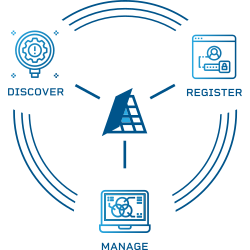
Apparity’s AI Asset Register helps financial institutions:
- Discover AI assets
- Centralize inventory management
- Notify users of required governance actions
- Assess risk and materiality
- Support governance workflows
- Maintain auditability
The platform includes direct integrations with:
- Microsoft Copilot Studio
- Azure AI Studio
This helps surface AI agents and models that may otherwise never appear in a centralized register. Apparity also supports automated scanning capabilities designed to identify AI-related activity across end-user environments, providing greater visibility into AI assets that may otherwise remain undiscovered.
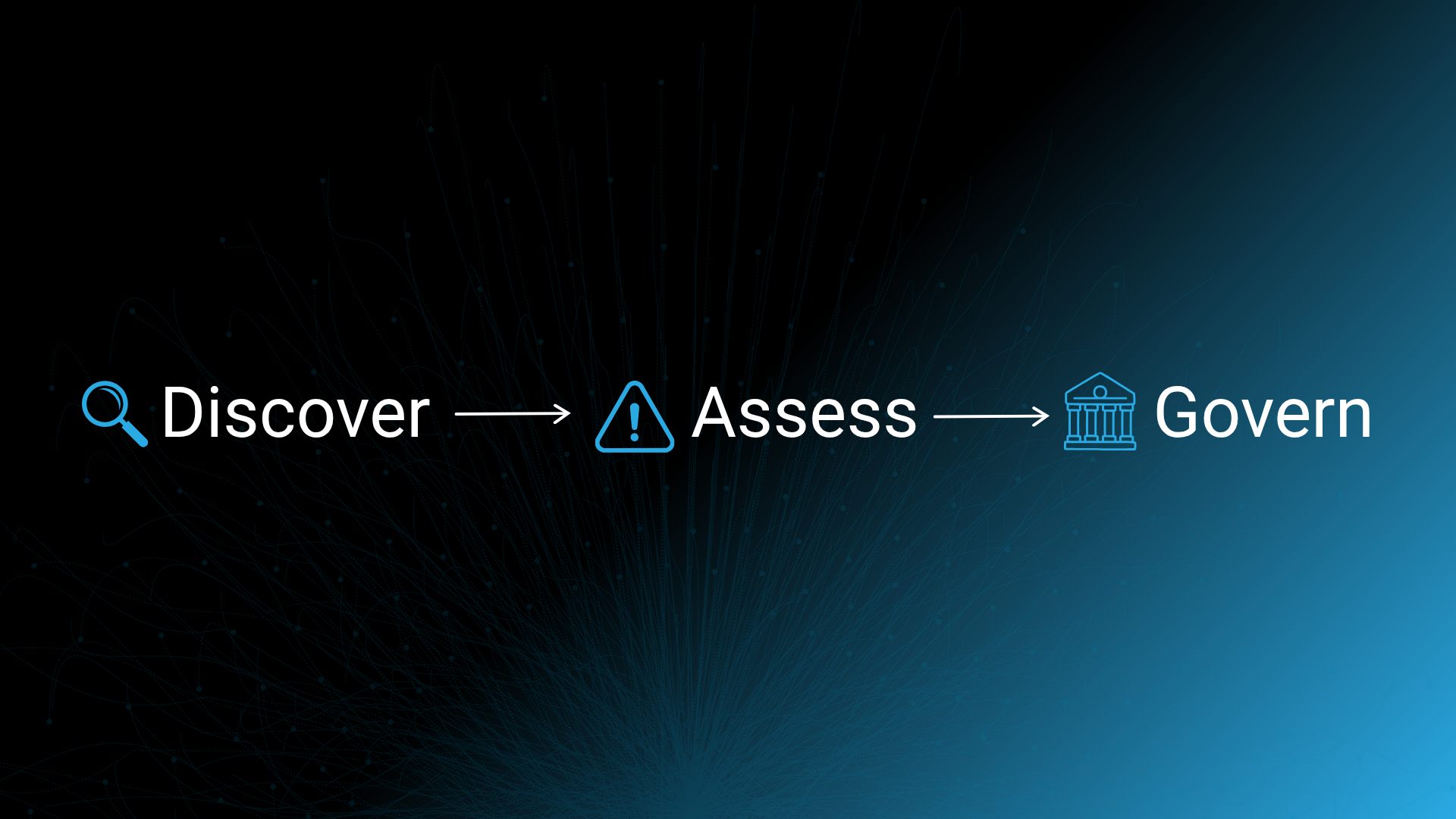
Effective AI Governance Starts With Three Steps
1. Discover What Exists
Organizations first need a complete inventory of AI assets across the enterprise.
2. Assess What Matters
Not every AI asset carries the same level of risk.
Institutions need to classify AI assets based on:
- Materiality
- Regulatory applicability
- Risk exposure
- Decision impact
3. Govern What’s Material
High-risk or material AI assets require:
- Formal oversight
- Documentation
- Defined controls
- Ongoing monitoring
- Auditability
This is where governance becomes operational.
Where Organizations Should Start
AI governance does not need to begin with a multi-year transformation initiative.
It can begin with a much simpler question:
What AI assets do we actually have?
Organizations that establish this visibility now will be better positioned to:
- Respond to regulators
- Support internal audit
- Reduce operational risk
- Strengthen governance maturity
Those that wait may find themselves trying to build inventories under increasing pressure.
Final Thought
An AI governance framework is only as strong as the visibility behind it.
Organizations cannot govern what they cannot identify.
Apparity helps financial institutions build and maintain an AI Asset Register designed to support evolving regulatory expectations and modern operational risk management.